DTF printing has surged in popularity, offering a flexible and cost-effective way to decorate textiles. Direct-to-film transfers enable designs to be printed on a specialized film before they are heat-pressed onto a wide range of fabrics. This guide walks you through the DTF printing process, from design prep to curing and finishing, so you can decide if it fits your project goals. Compared with traditional methods, DTF printing on fabrics delivers vibrant color density with a soft hand and lower setup costs for small runs. Whether you are on a budget for on-demand apparel or quick-turn gifts, this technology opens new possibilities.
As an alternative framing, think of this as a film-to-fabric transfer—film-based pigment printing that uses heat and an adhesive to attach color to textiles. Common LSIs include pigment film transfer, fabric film printing, and adhesive-backed color transfer, all pointing to the same core process. When researching options, DTG vs DTF comparisons can help you weigh fabric compatibility, cost, and workflow implications. Understanding DTF curing and finishing within this context clarifies durability and wash performance as you plan your project.
Understanding DTF Printing: Definitions, Direct-to-Film Transfers, and Why It Matters
DTF printing, short for Direct-to-Film printing, is a modern transfer method that deposits designs onto a PET film which is subsequently transferred to fabric using heat. The Direct-to-film transfers approach enables vibrant color, strong durability, and compatibility with a broad range of fabrics, from cotton to blends and synthetic fibers. This flexibility makes DTF appealing for on-demand apparel, gifts, and small-batch runs.
Compared with traditional screen printing or heat transfer, DTF printing process reduces setup for small orders and offers high color density with a soft hand in many formulations. Understanding the DTF printing process and the role of curing and finishing helps ensure the print adheres well and withstands washing.
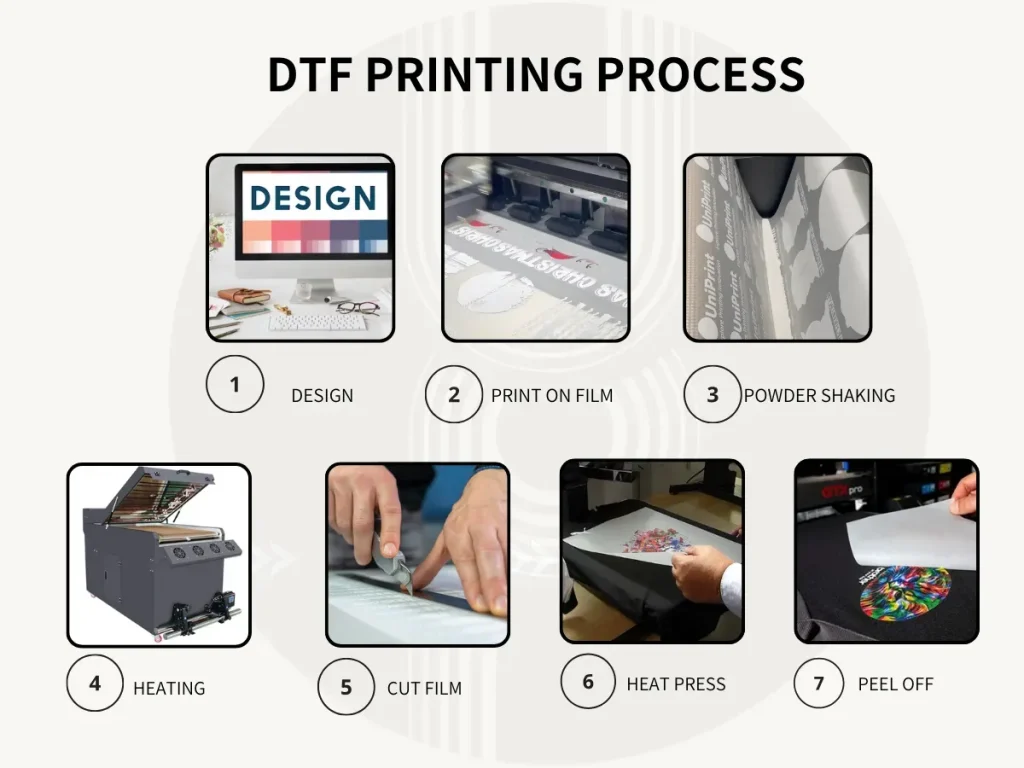
The DTF Printing Process: From File Prep to Finished Transfer
The DTF printing process begins with artwork prepared at high resolution (300 dpi or higher) and color-managed to match the printer profile. You print onto the DTF film using pigment inks, with a potential white underbase depending on the design and fabric color, resulting in a film that holds the complete design.
After printing, adhesive powder is evenly applied and cured to create a surface that can bond to fabric. The final steps—transferring the design with a heat press and performing finishing care—define the durability of the Direct-to-film transfer and its ability to withstand repeated washes.
DTF Printing on Fabrics: Compatibility, Color, and Hand Feel
DTF printing on fabrics offers broad compatibility, including cotton, polyester, blends, and certain synthetics. The process supports vibrant color and wide color gamut, with the white underbase playing a critical role for brightness on dark fabrics.
Fabric texture and stretch can influence how the adhesive layer and film sit on the surface, so you may need to adjust pressure, temperature, or curing time. Proper finishing ensures a softer hand feel and durable adhesion across different fabric types.
DTG vs DTF: How to Decide Between Two Modern Textile Printing Methods
DTG vs DTF decisions hinge on fabric mix, order size, cost, and required hand feel. DTG shines on solid-color cotton garments with a very soft hand but often requires pretreatment and is less forgiving on blends.
DTF offers lower setup costs for small runs and broad fabric compatibility, making it attractive for on-demand printing with mixed fabrics. In many cases, a hybrid approach—DTF for certain fabrics and DTG for others—delivers a balanced mix of cost, quality, and efficiency.
DTF Curing and Finishing: Powder, Heat, and Long-Term Durability
DTF curing and finishing center on applying adhesive powder to the printed film and then curing it so the powder fuses to the film. This creates a robust printable surface that can transfer cleanly when heat-pressed onto fabric.
During finishing, you’ll peel the transfer at the recommended temp (hot or cold peel depending on your setup) and allow the print to cure further on the garment. Proper curing also supports washing durability and colorfastness across fabrics.
Designing for DTF: Color Management, White Underbase, and Practical Tips
Design files should be prepared at high resolution (at least 300 dpi) and color-managed to your printer profile. Soft proofs help anticipate shifts for Direct-to-film transfers, ensuring accurate color reproduction in the final garment.
Plan white areas strategically for dark fabrics to avoid excessive layering that can stiffen the print. Consider layer order, color separations, and scalable artwork to maximize the impact of DTF printing on diverse fabrics.
Frequently Asked Questions
What is DTF printing and how do Direct-to-Film transfers work?
DTF printing, or Direct-to-Film printing, uses pigment inks to print designs onto a PET film. The film is then coated with a hot-melt adhesive powder, cured, and pressed onto fabric with a heat press to create a Direct-to-Film transfer. Benefits include vibrant color density, a soft hand feel, and the ability to decorate cotton, blends, and even polyester with relatively low setup costs for small runs.
What is the DTF printing process from design to finished product?
DTF printing process starts with design and file prep (high-resolution RGB artwork, vector logos). The design is printed onto the DTF film with pigment inks, using a white underbase if needed. After printing, the film is powder-coated and cured, then transferred to the fabric with a heat press. Finally, finishing and care steps, such as peeling and curing on the garment and proper washing guidance, complete the transfer.
Can DTF printing be used on different fabrics, and what should I know about DTF printing on fabrics?
DTF printing on fabrics works across cotton, polyester, blends, and other fabrics. For dark fabrics, a white underbase is essential to achieve bright colors, and fabric texture or stretch can influence the final hand feel. Proper curing and finishing help maintain color vibrancy and adhesion, while care guidelines (wash inside out, gentle detergents) preserve the print over time.
DTG vs DTF: which option is best for my project?
DTG vs DTF compares on fabric versatility, color density, and cost. DTF generally handles a wider range of fabrics (cotton, blends, synthetics) with lower setup costs for small runs and strong color density, while DTG can offer a softer hand on solid-color cotton with more pretreatment considerations. A hybrid approach—using DTF for some fabrics and DTG for others—can balance cost, quality, and efficiency.
What are the key steps in DTF curing and finishing to ensure durability?
Key steps in DTF curing and finishing include curing the adhesive powder on the printed film to fuse it, cooling the film, and transferring the design with appropriate heat press parameters (temperature, time, pressure). After transfer, peel the film according to the process (hot or cold), then allow the print to cure further on the garment. Following proper care guidelines helps maximize adhesion and durability.
What maintenance and troubleshooting tips help ensure consistent DTF printing quality?
For reliable DTF printing quality, regularly calibrate color profiles and printer alignment, manage powder application to avoid dust and flaking, and keep ink lines clean to prevent clogs. Troubleshoot common issues such as dull colors or mis-registration by rechecking film handling, curing times, and heat-press settings. Perform washing durability tests on sample garments before large runs to validate adhesion and colorfastness.
| Topic | Key Points |
|---|---|
| Introduction to DTF Printing | – DTF = Direct-to-Film printing; prints designs onto PET film, then coats with adhesive powder and uses heat to transfer to fabric. – Produces vibrant colors, durability, and a soft hand feel. – Works on a wide range of fabrics (cotton, polyester, blends) with relatively low upfront setup costs. |
| DTF Process Overview | – Design and file prep: high-resolution RGB (300 dpi+), color management, optional white underbase. – Printing on DTF film: print design on film with pigment inks, including white underbase if needed. – Curing and powder application: dry, apply adhesive powder, cure to fuse powder. – Powder curing and cooling: cool to prevent flaking. – Transfer to fabric with heat press: apply pressure/temperature/time per system to transfer adhesive. – Finishing and care: peel hot/cold per process, cure further on garment, wash inside out. |
| DTF vs DTG | – Fabric versatility: DTF works on cotton, blends, polyester; DTG excels on solid-color cotton but may need pretreatment on dark fabrics. – Color/texture: DTF = stronger color density with glossy finish; DTG = softer hand, may need white ink on darks. – Setup/cost: DTF lower setup for small runs; DTG higher upfront due to printers and pretreatment. – Durability: both can be durable when properly cured; DTF often adheres well to more fabrics. |
| Materials, Equipment, and Setup Essentials | – Printer with pigment inks (often used in DTF) and possible firmware/profile tweaks. – DTF film (PET) designed for pigment inks and powdering. – White ink capability. – Adhesive powder. – Curing/heat sources (heat press, dryer). – Powder shaker and curing tray. – Heat press with adjustable time/temperature/pressure. – Software/color profiles (RIP, color management) for reliable color. |
| Fabric and Substrate Considerations | – DTF works on cotton, polyester, blends, and synthetics; white underbase is essential for vibrant colors on dark fabrics. – Fabric texture/stretch can affect final print geometry. – Light fabrics may need less underbase; dark fabrics respond well with proper underbase. – Hand feel is influenced by adhesive layer and curing; aim to minimize stiffness. |
| Design Best Practices | – Resolution: start at 300 dpi+ at final size; vector logos scale cleanly. – Color management: calibrate monitors and use printer profiles; soft proofing helps anticipate color shifts. – White underbase planning: plan white areas for dark fabrics to avoid heavy layering. – Layering/color separation: test separations to avoid muddiness or bleed. – Design for scale: consider print area on chest/back/sleeves; bold designs translate best. |
| Cost, Pricing, and ROI & Maintenance | – Material costs: inks, powders, film, pretreatment if needed. – Equipment amortization: costs spread with usage; reduce downtime with good maintenance. – Labor/turnaround: optimized DTF workflows can be faster for small batches. – Pricing strategies: per-unit pricing by fabric and print size; bundle services (design, color matching, finishing). – Maintenance/quality: regular calibration, powder management, ink line maintenance, and wash/durability tests. |
Summary
Conclusion: Is DTF Printing Right for You? DTF printing offers a flexible, cost-efficient approach to apparel decoration, blending broad fabric compatibility with on-demand production. By mastering the transfer process, selecting the right materials, and following best practices for design, curing, and finishing, you can deliver vibrant, durable prints that stand up to real-world wear. For rapid prototyping, low-volume runs, or custom apparel across varied fabrics, DTF printing is worth serious consideration. As you gain experience, you’ll refine your workflow, improve color accuracy, and unlock more opportunities with direct-to-film transfers.