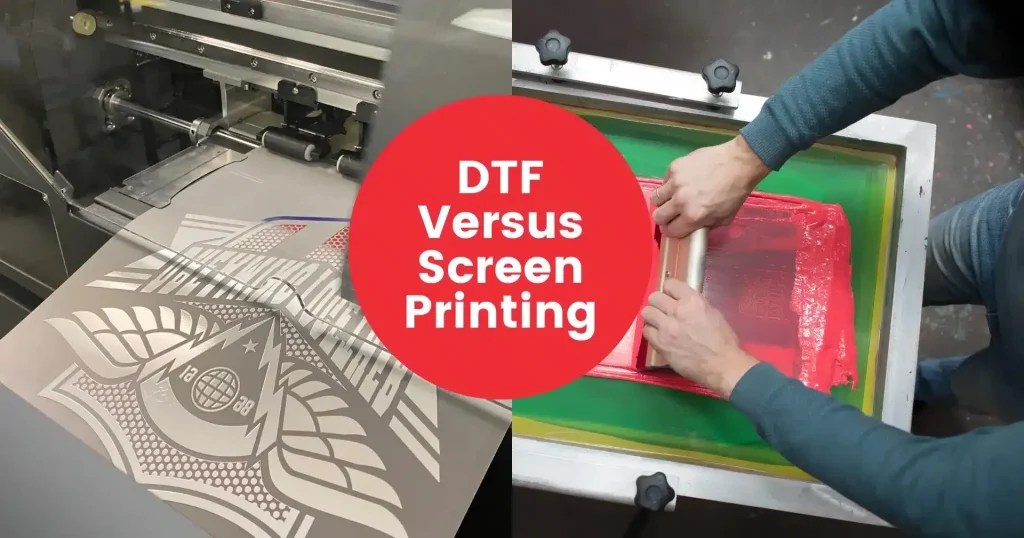
DTF transfers vs screen printing are two of the most discussed apparel decoration methods shaping brand identity today. Understanding the DTF transfer advantages reveals how vibrant color reproduction and fabric compatibility can fit diverse garments. screen printing durability is renowned for bold, long-lasting impressions, especially in bulk runs on cotton and blends. A cost comparison DTF vs screen printing helps brands weigh upfront investment against unit costs as volumes grow. Equally important, the soft hand feel of the finished product matters to shopper perception and repeat purchase.
For designers weighing heat-transfer film options against traditional silkscreen processes, the comparison hinges on application scope and fabric choice. Direct-to-film prints offer flexible short-run production and strong color reproduction across cotton, blends, and some synthetics, while screen-print methods excel for high-volume, cost-efficient runs. When evaluating durability, you’ll see that screen-print results often endure higher wash cycles, whereas DTF can vary with film quality and curing but remains prized for a soft, flexible hand. Brands can optimize by mixing approaches: use film transfers for on-demand designs and complex colors, and rely on classic screen printing for basic colors on durable fabrics. By aligning the print strategy with fabric type, desired hand feel, and production tempo, you can maximize quality, speed to market, and cost efficiency.
DTF transfers vs screen printing: Which method best fits brand identity and flexibility
Brand identity and production flexibility often determine how a print method fits a brand’s roadmap. DTF transfers vs screen printing presents a trade-off between rapid iteration, fabric versatility, and scalable efficiency. In practice, DTF offers strong color reproduction and adaptability across an array of fabrics—from cotton to blends and beyond—supporting on-demand drops and limited editions without investing in an extensive screens library. This flexibility can help a growing brand respond quickly to market feedback and seasonal shifts.
Conversely, traditional screen printing excels in consistency and cost efficiency for larger runs on standard fabrics. Once the screens are prepared and the workflow is optimized, bulk production can deliver high throughput with predictable color outcomes. The choice impacts lead times, art complexity, and long-term cost structure, making it essential to map your product roadmap against production realities before committing to a single method.
DTF transfer advantages: How this method compares to traditional screen printing
DTF transfer advantages include the ability to reproduce complex artwork with smooth gradients on a broad range of fabrics—from cotton and blends to some poly fabrics. The film-based process supports high color saturation and precise edge definition without requiring a separate underbase for every color. For brands experimenting with bold graphics or multi-color logos, this versatility can shorten design cycles and reduce upfront tooling costs.
In addition, the setup is often friendlier for small runs and on-demand production, enabling rapid iteration without maintaining a large screens library. However, results can vary by film quality and curing conditions, so it’s important to test on representative fabrics to confirm color fidelity and wash performance.
Durability in practice: screen printing durability and DTF wear tests
Screen printing durability is a core reason many brands choose this method for staples and high-volume drops. In well-optimized workflows, ink sits on or slightly into the fabric surface, and durable inks coupled with proper curing resist fading, cracking, and peeling through repeated wash cycles. When designed for long-term wear, screen prints tend to maintain color depth and legibility after hundreds of washes.
DTF wear tests show strong color retention on many fabrics, but durability can vary with the adhesive, film, and fabric interaction. Some blends and polyesters may require alternative formulations or precise curing to avoid delamination or edge cracking over time. Brands often evaluate wash tests and feel for each fabric family to set appropriate care and expectations.
Cost considerations: cost comparison DTF vs screen printing for different run sizes
Cost considerations vary with order size, color count, and fabric type. For small runs, DTF can be cost-competitive or even cheaper because you avoid per-color screen setup and minimize waste, aligning with a lean startup model. A cost comparison DTF vs screen printing often favors DTF when artwork is complex or highly color-dense and volumes are modest.
For large volumes, screen printing can push unit costs down due to economies of scale, with automation handling high throughput. However, the initial investment in screens, emulsions, and curing ovens adds to lead times and risk if demand shifts.
Soft hand feel and print quality: balancing texture, weight, and fabric comfort
Soft hand feel is a critical attribute that influences perceived quality and comfort. DTF transfers can deliver a very soft hand when the film and adhesive are chosen carefully and cured correctly, producing a light touch that sits near the surface without a heavy ink buildup.
On the flip side, screen printing can achieve a similarly soft hand with carefully selected water-based or discharge inks, but thick builds or multiple color layers on dark fabrics can increase hand feel weight. Brands aiming for premium softness should pilot fabric-specific tests to balance color depth and tactile comfort.
Practical decision framework: best-use scenarios for brands choosing between DTF and screen printing
A practical decision framework starts with a clear checklist: anticipated order size, number of colors, fabrics used, and required speed to market. Assess how many SKUs you’ll launch per season and whether you’ll need frequent design changes. This helps determine whether DTF transfer advantages or screen printing strengths align with your brand’s cadence and margins.
For many brands, a hybrid approach delivers the best of both worlds. Use DTF transfers for on-demand items, designs with complex color gradients, or fabrics that don’t respond well to traditional screens. Reserve screen printing for high-volume staples on durable fabrics where the per-unit cost savings and long-term durability can reinforce your brand’s value proposition. Establish consistent color proofs and wash tests to maintain quality across runs.
Frequently Asked Questions
DTF transfers vs screen printing: What are the DTF transfer advantages when comparing these methods for apparel branding?
DTF transfer advantages include vibrant color reproduction across a wide range of fabrics, good stretch, and lower setup for small runs. They handle complex gradients well and support on‑demand production, helping brands iterate quickly. Durability and hand feel can vary with material and cure quality, so testing is recommended.
DTF transfers vs screen printing: In terms of screen printing durability, how does it compare and where does DTF fit in?
Screen printing durability is renowned when inks are properly cured, delivering long-lasting color through many washes on cotton and blends. DTF durability depends on film quality, adhesive, and curing; with the right materials, it can be very durable but may vary by fabric. For large‑volume, traditional durability often favors screen printing, while DTF offers flexibility on harder‑to‑print fabrics.
DTF transfers vs screen printing: What is the cost comparison DTF vs screen printing for small runs and multi-color designs?
This is a cost comparison DTF vs screen printing: DTF typically has lower upfront costs and is economical for small runs or designs with many colors due to minimal setup. As volumes rise, per‑unit costs can tilt toward screen printing, especially for fewer colors, because of efficient high‑volume production. A design‑ and fabric‑specific cost analysis is advised.
DTF transfers vs screen printing: How do the two methods differ in soft hand feel, and can DTF achieve a comparable feel to screen printing?
DTF transfers can deliver a smooth, flexible hand when cured correctly, often lighter than dense ink layers. Screen printing can feel heavier with multiple color layers, though high‑quality inks and careful curing improve hand feel. Testing on target fabrics helps you balance color vibrancy, durability, and comfort.
DTF transfers vs screen printing: Which method offers better color accuracy and cost efficiency for complex multi-color designs?
DTF transfers vs screen printing: For complex multi-color designs, DTF generally handles many colors and gradients with less setup, favoring flexibility and faster prototyping. Screen printing can be more cost-efficient in large runs with fewer colors, once screens and workflows are established. Proofing on your fabric is key to ensure color accuracy.
DTF transfers vs screen printing: When should a brand choose one method over the other, and is a hybrid approach common?
For startups and brands needing fast iteration and on‑demand production, DTF transfers vs screen printing offer flexibility and lower upfront risk. For high‑volume drops on durable fabrics with simpler color palettes, screen printing delivers economies of scale and proven longevity. A hybrid approach—DTF for variable designs and fabrics, plus screen printing for core basics—is a common and effective strategy.
| Topic | DTF transfers | Screen printing |
|---|---|---|
| Definition |
|
|
| Advantages |
|
|
| Substrate compatibility |
|
|
| Durability / wash |
|
|
| Hand feel |
|
|
| Color / Finish |
|
|
| Cost considerations |
|
|
| Setup & speed |
|
|
| Best use case |
|
|
| Practical guidelines |
|
|
| Quality control |
|
|
| Pitfalls |
|
|
Summary
DTF transfers vs screen printing are two popular methods for apparel decoration, each offering distinct strengths and trade-offs. DTF transfers provide flexibility across fabrics, vibrant color reproduction, and suitability for small runs or on-demand production, while screen printing delivers outstanding durability, cost efficiency at scale, and crisp, bold color on a wide range of materials. A practical approach for many brands is to adopt a hybrid strategy: use DTF for on-demand designs, complex color work, and fabrics where color performance matters most, and reserve screen printing for high-volume basics and trusted cotton fabrics. By aligning your choice with order size, color count, fabric types, and desired hand feel, you can optimize quality, speed, and profitability across product launches and seasonal drops. A controlled testing plan—color proofs, wash tests, and simulated wear—helps validate your selection before broader production.